
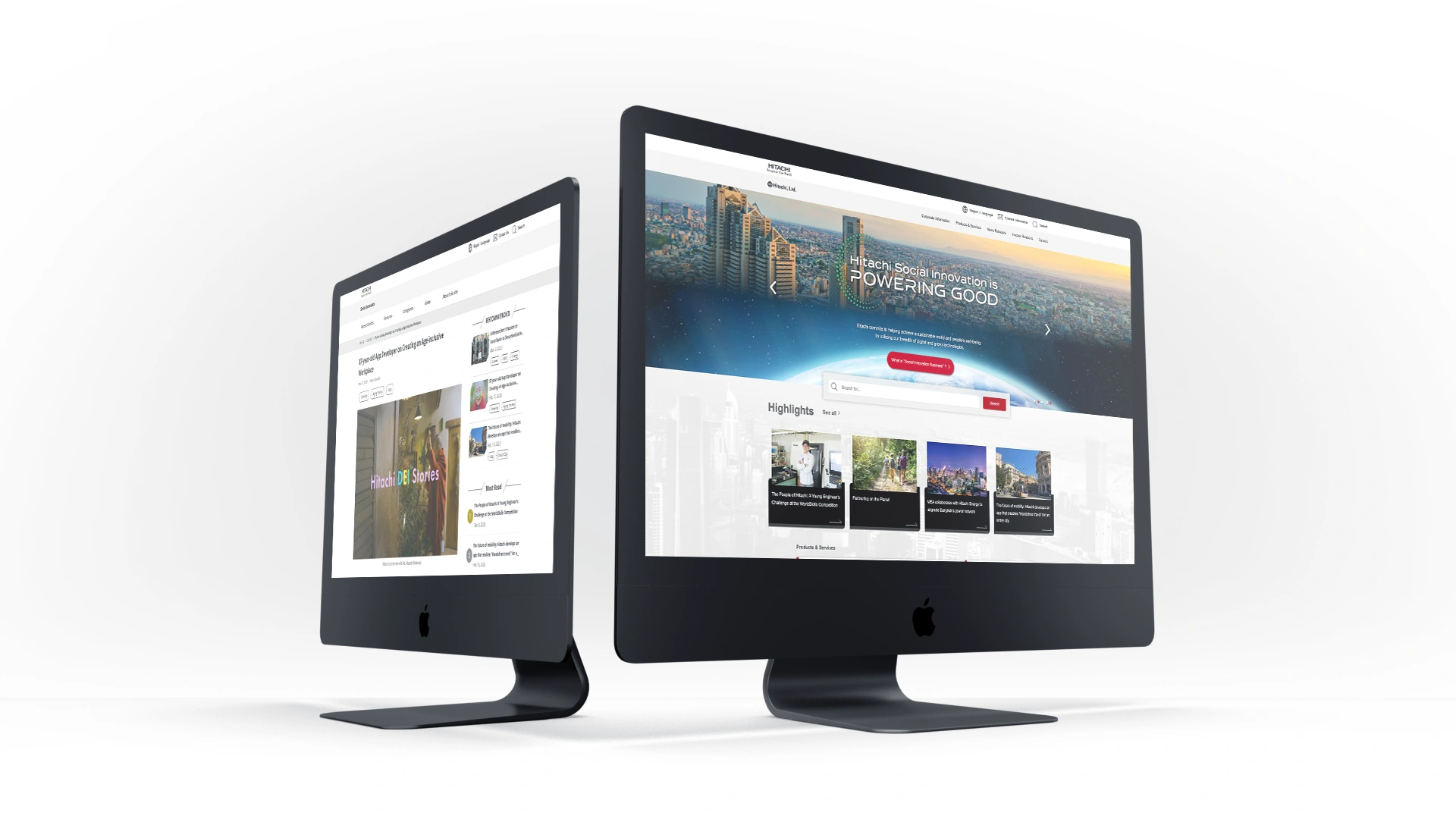
Hitachi
Overview
I worked on the discovery phase of One Hitachi Web, a large-scale initiative to consolidate over 60 regional Hitachi websites into a single global platform.
The aim was to create a unified digital presence that would improve user experience, strengthen SEO performance and reduce fragmentation across regions.
During this phase, I contributed to auditing existing sites, defining the global information architecture, and shaping the strategy for a multi-year migration.
Role
- UX Designer
Timeline
- 6 months
Platform
- Web
The problem
Hitachi’s digital presence was spread across dozens of regional websites, each operating independently with different structures, content and technologies.
This fragmentation created challenges for both users and the business.
Users struggled to navigate between regions with visual inconsistencies while internal teams battled for visibility amongst other Hitachi domains.
Disjointed ecosystem
Over 50 websites with inconsistent structures
Poor user experience
No unified navigation or journey
SEO inefficiencies
Content duplication and cannibalisation issues
Technical complexity
Multiple CMS platforms and legacy systems
Role
I contributed to both UX and project planning activities during the discovery phase.
My work focused on understanding the current ecosystem and helping define the structure of a future global platform.
I worked with our in-house SEO team to thoroughly examine Hitachi’s analytics data.
Responsibilities
- Conducting high-level audits across multiple websites
- Facilitating stakeholder workshops
- Creating sitemaps and user journeys
- Running card sorting exercises
- Producing wireframes for key templates
- Delivering SEO audit insights to stakeholders
- Supporting planning and estimation for future phases
Constraints
There were a few key constraints that shaped the approach:
Scale and complexity
The project involved over 60 websites across multiple regions.
Global vs. local needs
Balancing consistency with regional flexibility & localisation was a key challenge.
Stakeholder alignment
Multiple teams with different priorities needed to be aligned.
Discovery Process
We began with a high-level audit of all Hitachi websites to understand the scale and complexity of the ecosystem.
This included analysing:
- Content volume
- Technical setups
- SEO performance
- Site structures
The audit revealed significant variation across regions, including differences in CMS platforms, content quality and user journeys.
Key Insights
The discovery phase surfaced several critical insights:
Poor inter-site structure made navigation difficult
Content duplication and outdated pages were widespread
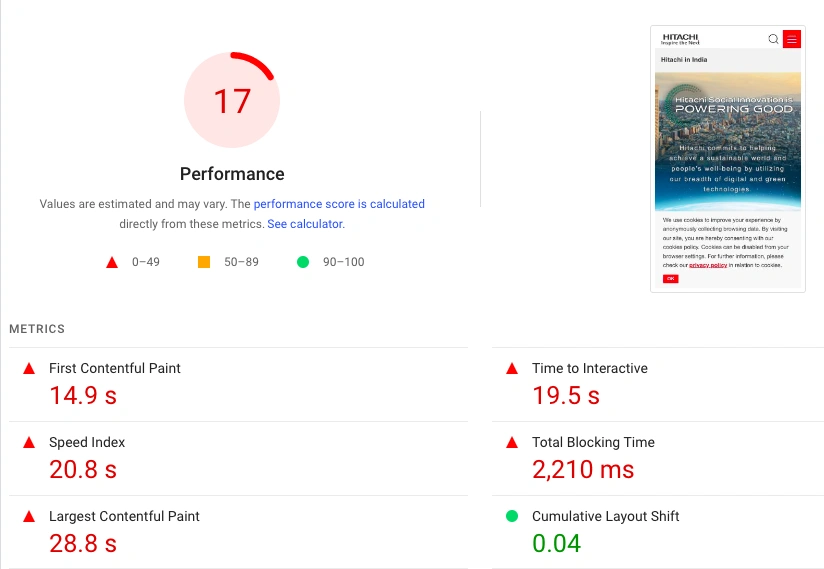
Inconsistent tracking and analytics limited performance visibility
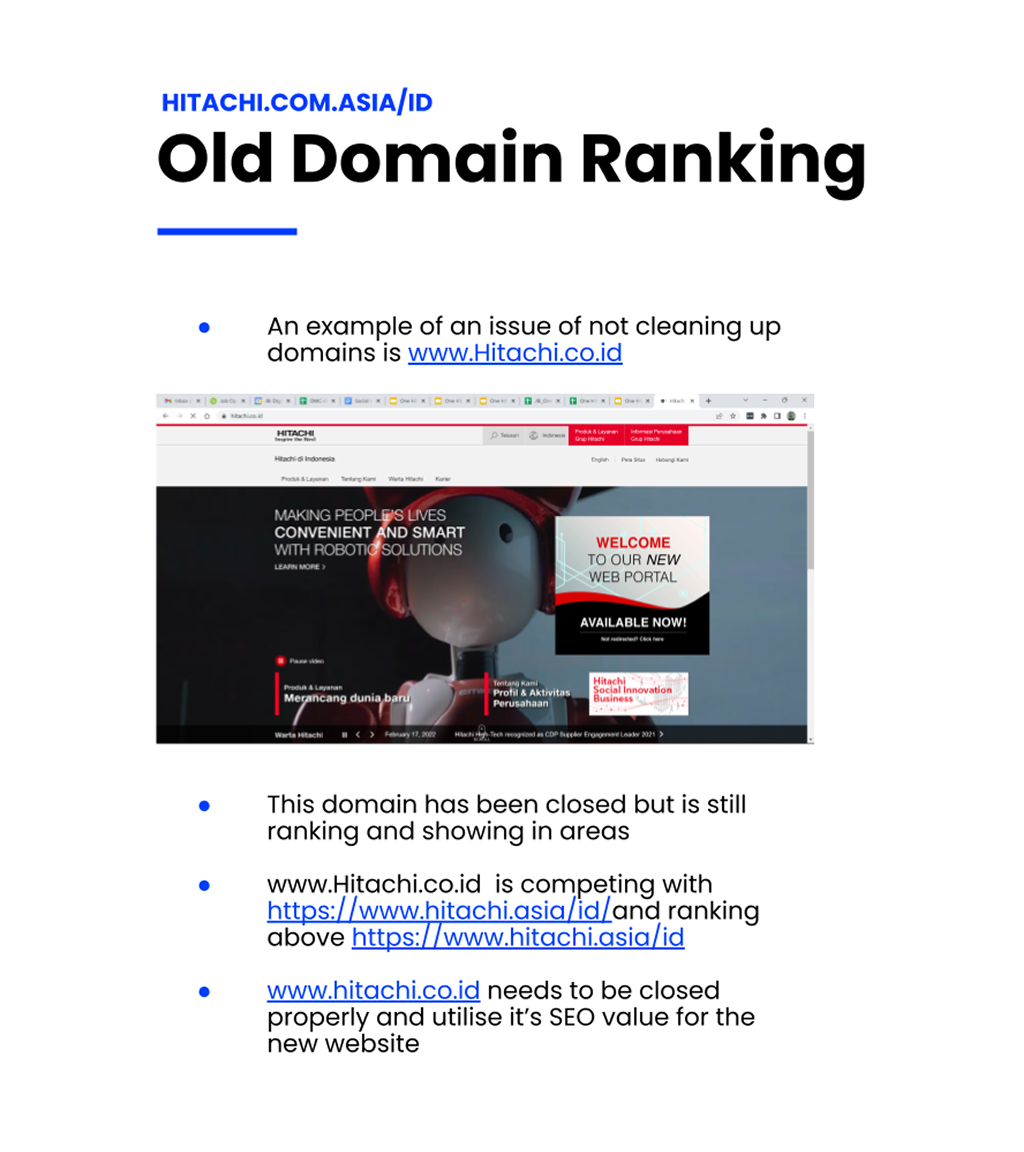
Many domains were over 10 years old, requiring preservation of SEO value
Defining the Global Approach
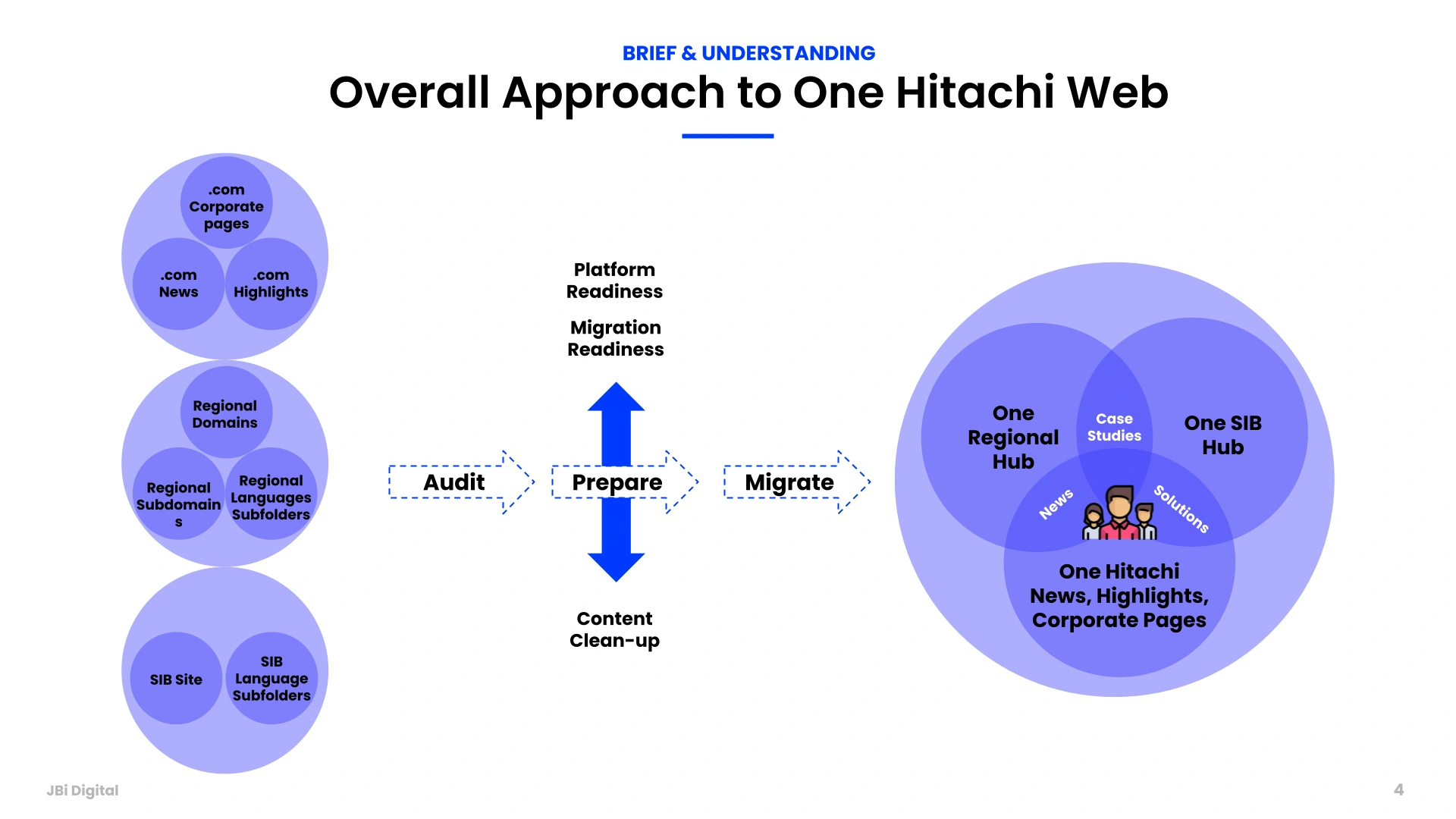
A key focus of the project was defining how a single platform could support both international and region-specific needs.
We explored approaches that balanced:
- A unified global structure
- Flexibility for local content
- Scalable design systems
- Consistent branding
This included defining high-level information architecture and exploring template-based design approaches.
Information Architecture
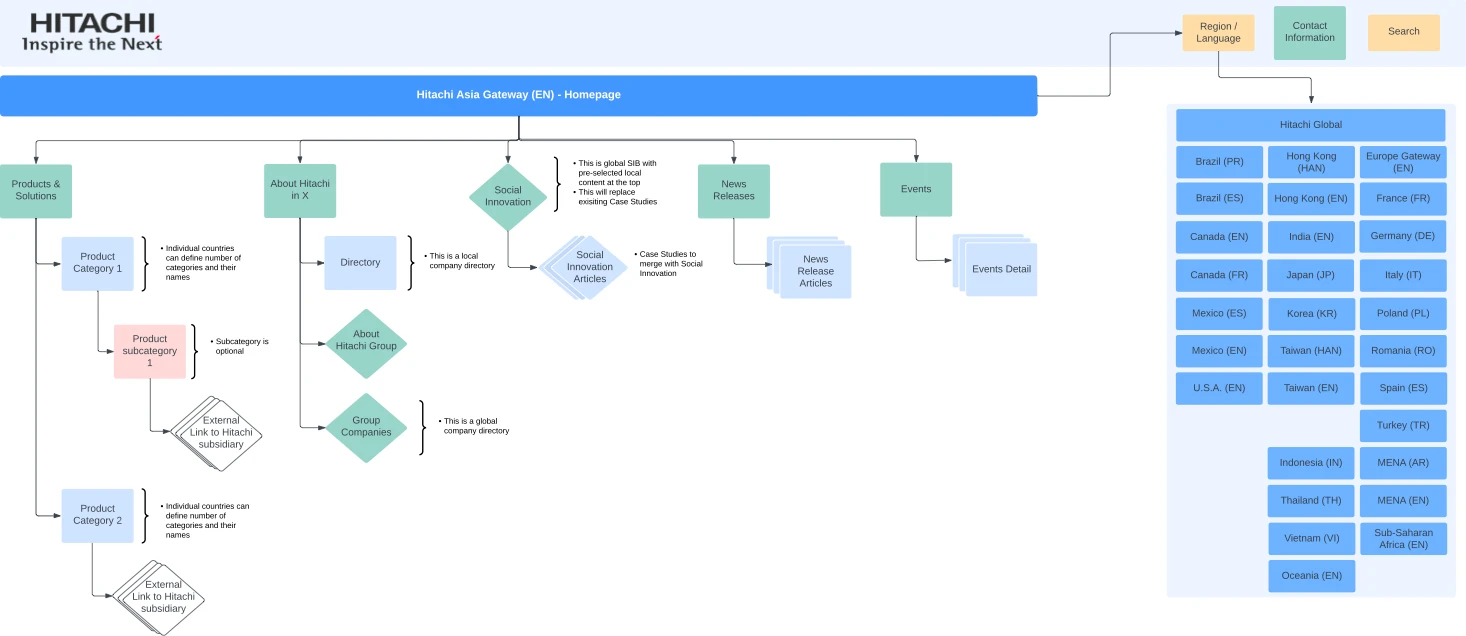
We developed sitemaps that defined how content could be structured across the global platform.
The goal was to create a scalable foundational structure that could support a wide range of content types while remaining easy to navigate.
Card sorting exercises with the global team helped to validate how content should be grouped and labelled.
SEO & Migration Strategy
SEO played a critical role in shaping the migration strategy.
The audit revealed issues such as:
- Duplicate content across domains
- Multiple competing pages for the same keywords
- Frequent crawl and indexing inconsistencies
A key risk was losing existing SEO value during migration.
We proposed mitigating this through a comprehensive content audit, deleting duplicate content, setting up proper redirects and preserving high-value content wherever possible.
Stakeholder Alignment
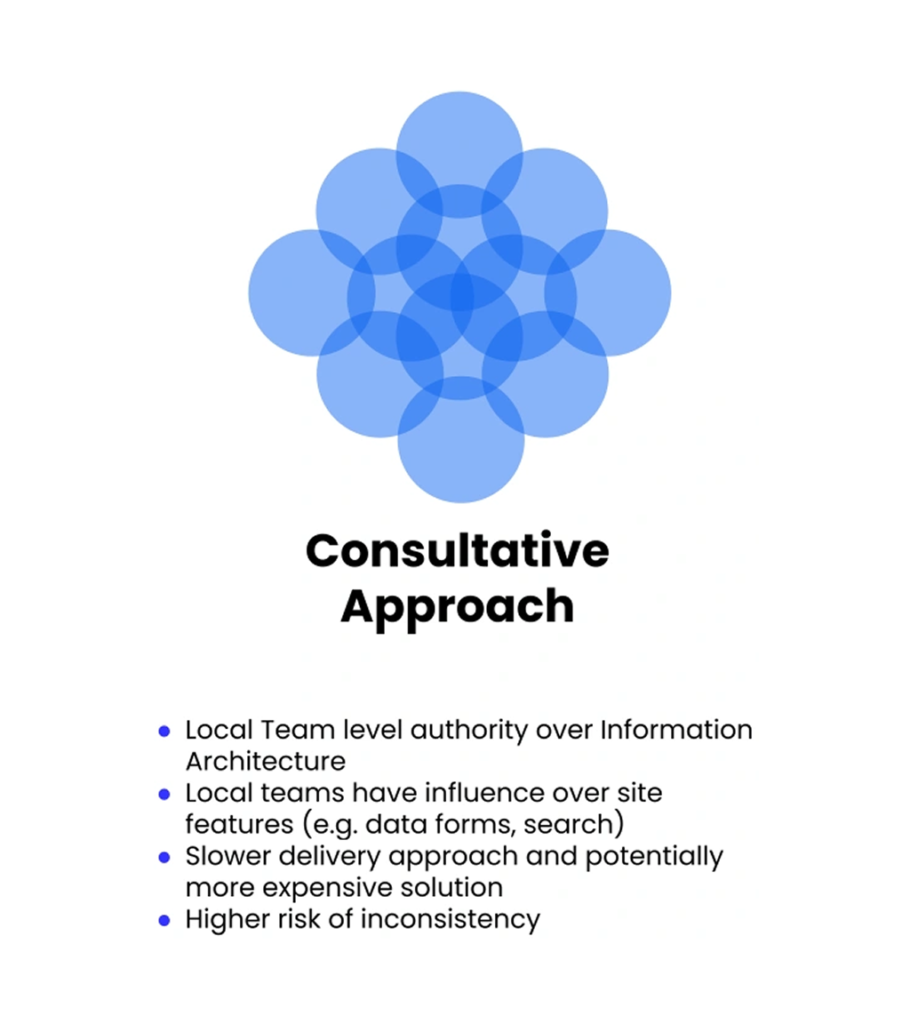
A significant part of the project involved aligning stakeholders across both global and regional teams.
Workshops were held with local teams to:
- Define goals and priorities
- Address concerns around centralisation
- Align on the long-term vision
This helped build a shared understanding of the project and reduce resistance to change.
Outcome & Impact
The discovery phase established a clear foundation for the project and defined the direction for future phases of the multi-year project.
The work delivered:
- A high-level audit of 50+ websites
- Defined information architecture
- SEO and migration strategy
- Stakeholder alignment on project goals
- A roadmap for Phase 2 and 3
Reflection & Learnings
This project highlighted the complexity of designing at an enterprise scale.
It reinforced the importance of aligning business and user needs when working across global systems.
It also strengthened my experience in information architecture, stakeholder management and SEO-driven UX decisions.
Next project
Optimising the British Council’s global IELTS booking experience for millions of users.