Skills Connect
Overview
The West of England Combined Authority (WECA) needed a platform to help residents access training opportunities, career support and employment resources.
The challenge was to bring together fragmented services into a single, accessible entry point.
The platform needed to support a wide range of users including vulnerable users, young people exploring careers and adults looking to retrain.
During the project I helped shape the user experience through research, journey mapping, information architecture and iterative design.
Role
- UX Designer
Timeline
- 5 months
Platform
- Web
The problem
Skills support in the region existed across many organisations and platforms with no central hub.
For many users, it was difficult to understand where to begin or how to find relevant opportunities.
Careers advisers often had to guide people through the process manually, acting as navigators for a complex system.
This created barriers for users who:
- Had low digital confidence
- Were unsure of their career direction
- Needed quick access to support
- Had disabilities or impairments
Fragmented information
Users struggled to locate relevant resources
No clear entry point
There was no single place to begin
High reliance on advisers
Many users needed guidance to navigate options
Accessibility barriers
Information was not always easy to scan or understand
Role
I worked as part of the UX team during the discovery phase and contributed to shaping the early experience of the platform.
My work focused primarily on understanding user needs, structuring the platform and designing early interface concepts.
Responsibilities
- Hosting and contributing to user interviews
- Creating user journey maps
- Designing wireframes for key pages
- Developing the site structure and sitemap
- Iterating designs with stakeholders
- Conducting accessibility checks against WCAG AA 2.2
- User testing with vulnerable users
Constraints
There were a few key constraints that shaped the approach:
Limited access to end users
We initially relied on insights from support providers such as careers advisers.
Complex user groups
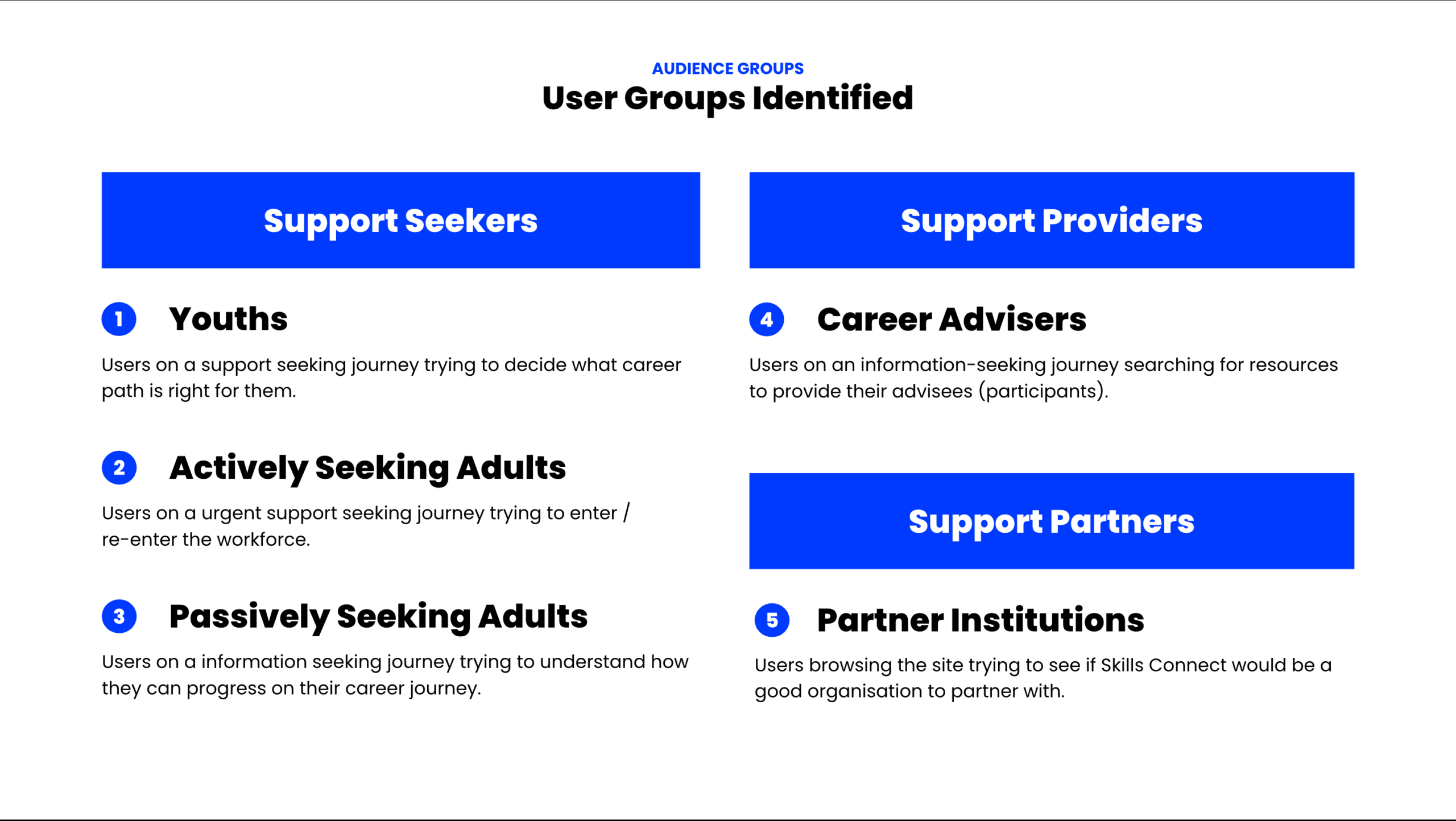
The platform needed to support a wide range of audiences with different goals
Public sector accessibility standards
The platform needed to meet WCAG AA 2.2 requirements
Discovery Process
We began the project by working with WECA stakeholders to understand the goals of the platform and the current challenges users were facing.
Workshops helped define the purpose of Skills Connect and align the team around a shared vision.
A key theme that emerged was the need for a single entry point into the regional skills ecosystem (a directory).
Understanding users
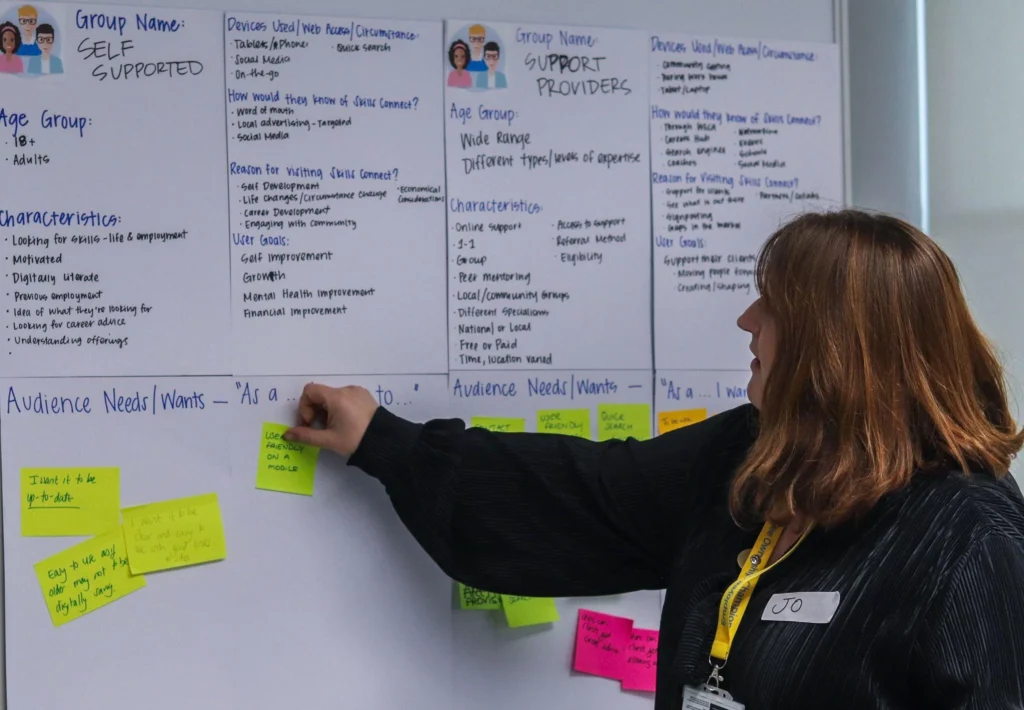
Because direct access to end users was limited, we spoke with careers advisers and support providers who already worked closely with them.
These conversations revealed that many users did not know exactly what they were looking for and often relied on advisers to help interpret available options.
The platform therefore had to prioritise clarity, guidance and simplicity.
Users frequently reported:
Confidence issues
Unclear career direction
Financial challenges
Key Insights
Below are some of the key insights taken from our research:
Fragmented information
Users struggled to locate relevant resources
High reliance on advisers
Many users needed guidance to navigate options
Users had diverse barriers
Many faced wider challenges affecting employability than just finding a course (i.e. confidence, mental health, finances)
Accessibility and clarity were essential
Content had to be easy to scan for those with accessibility needs or low digital literacy
Structuring the platform
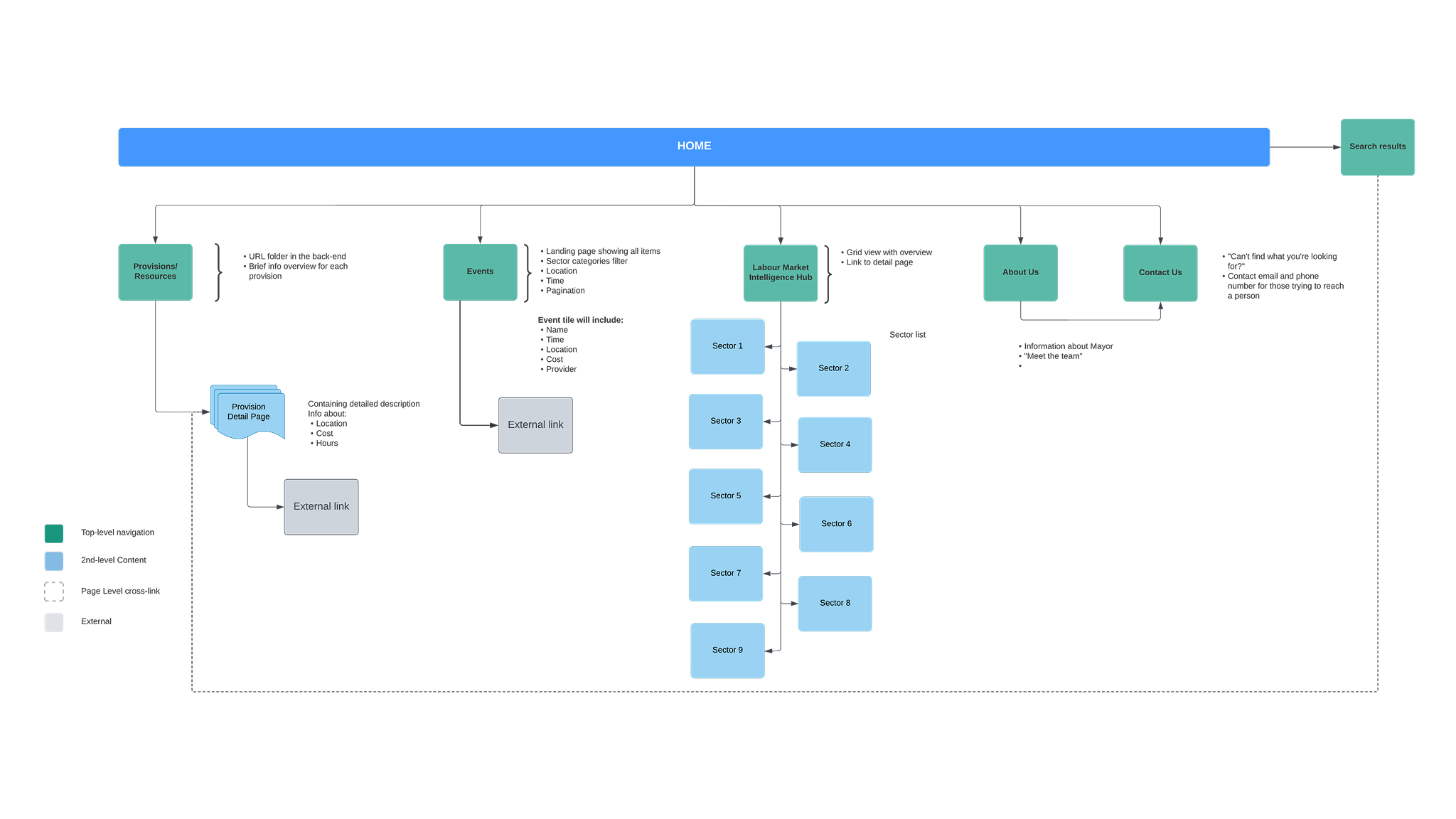
To support these needs, I worked on developing the structure of the platform.
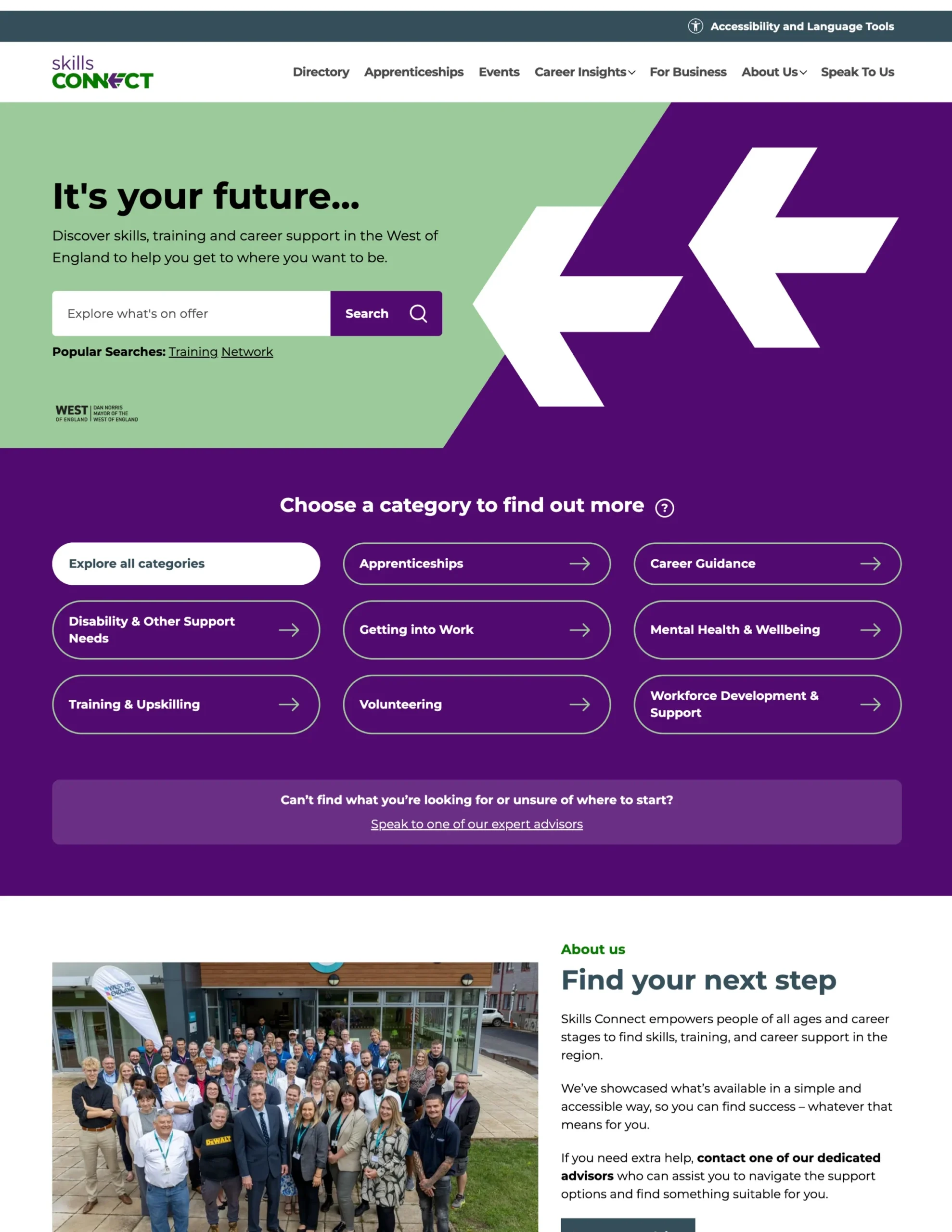
We focused on creating a simple navigation system that could help users quickly identify relevant opportunities.
The sitemap helped define how different services and resources would be organised across the platform.
Design Exploration
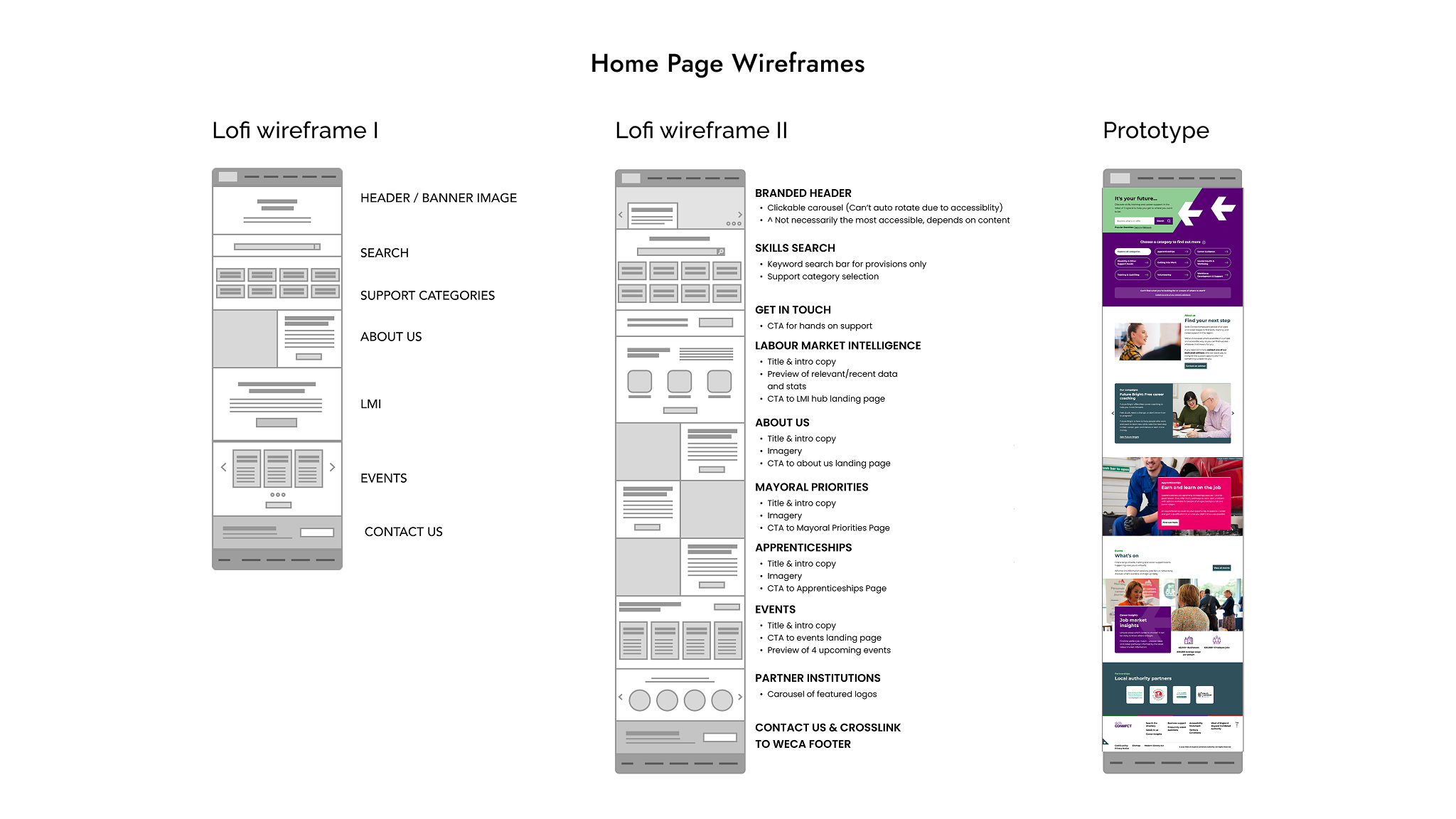
I created a series of low-fidelity and high-fidelity wireframes to explore how users would navigate the platform and discover opportunities.
These designs were iterated through feedback sessions with WECA stakeholders and the project team.
Key priorities included:
- Simple navigation
- Clear filtering
- Easy-to-scan content
- Showcasing labour market information
Accessibility
Accessibility was a major consideration throughout the project.
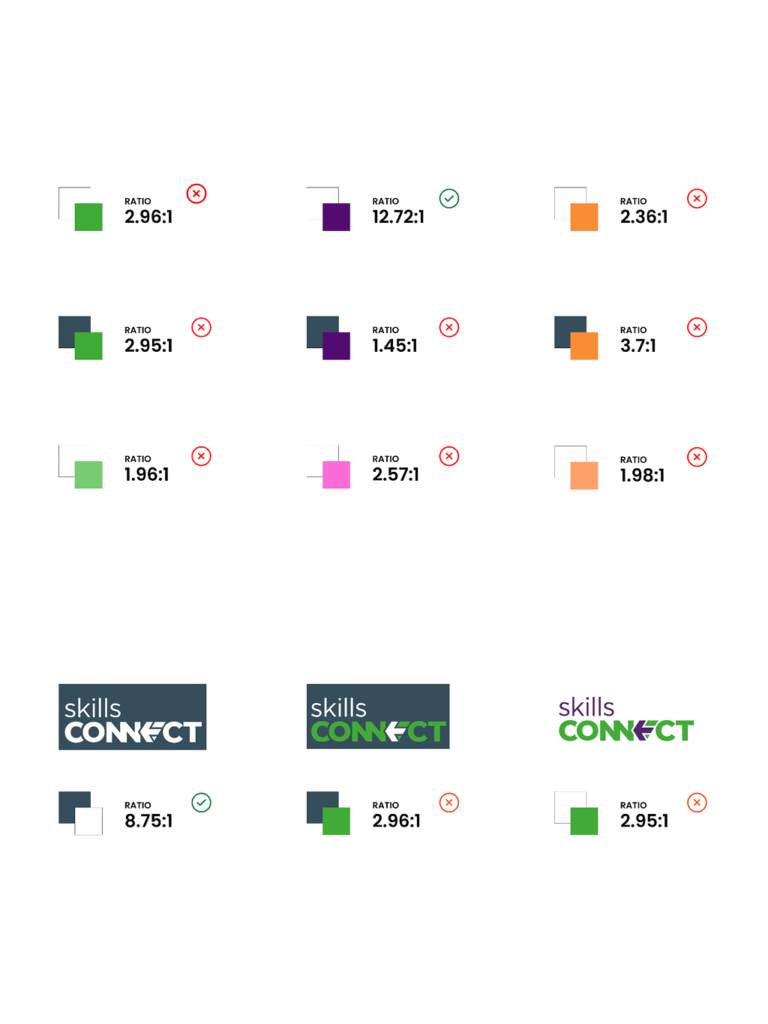
After receiving the branding guidelines from the local authority team, I conducted accessibility checks to ensure the designs met WCAG AA 2.2 standards.
This included:
- Colour contrast testing
- Reviewing readability
- Ensuring clear content hierarchy
Designing for accessibility was particularly important given the diverse range of users the platform needed to support.
User testing with vulnerable users began during the prototyping phase to inform UX as early as possible.
Outcome & Impact
The discovery phase helped define a clear direction for the platform and align stakeholders around how Skills Connect should support users.
This included:
- A structured information architecture
- Defined user journeys
- Early interface designs
- Accessibility-aware design foundations
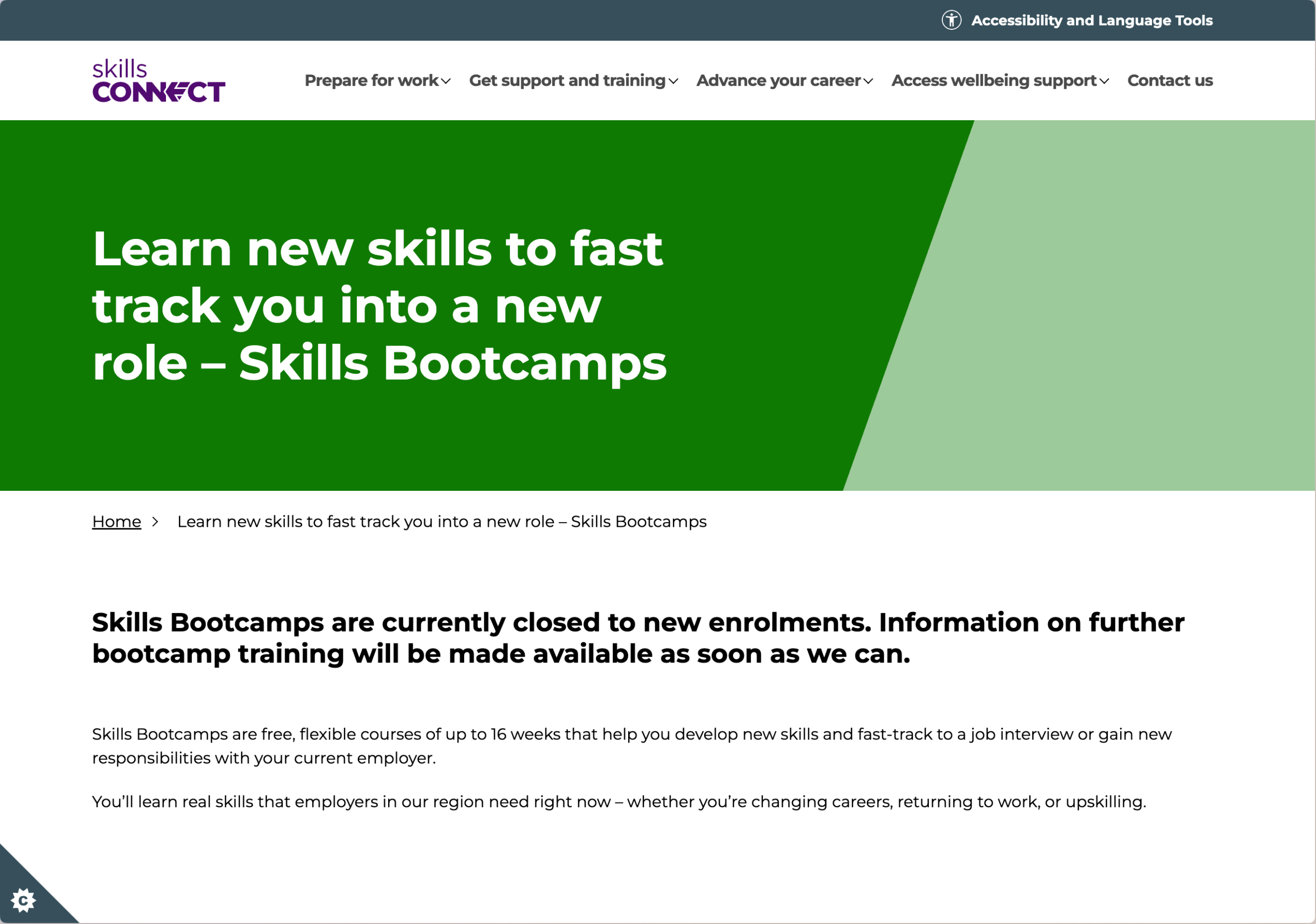
The platform has since been populated with resources and is now used as a regional hub for skills and employment support.
Reflection & Learnings
This project reinforced how important clarity and accessibility are when designing services for a broad audience.
Working with proxy users also highlighted the value of synthesising insights from multiple sources and translating them into practical design decisions.
It was also a strong experience in balancing stakeholder needs while maintaining a focus on the end user.
Next project
See how I helped consolidate 60+ global websites for Hitachi.